
Either / Aur
All ways, always

I am in Hyderabad sitting in the atrium at the Indian School of Business, one of my favorite spaces in all of India. It is a nostalgic place for me, and its breezy, open-air expansiveness has played host to many wonderful memories. As of late the school has built some stunning new buildings on campus, and the dining hall recently underwent a remodel. Despite that, one thing that has retained its timeless charm is the samosa counter.
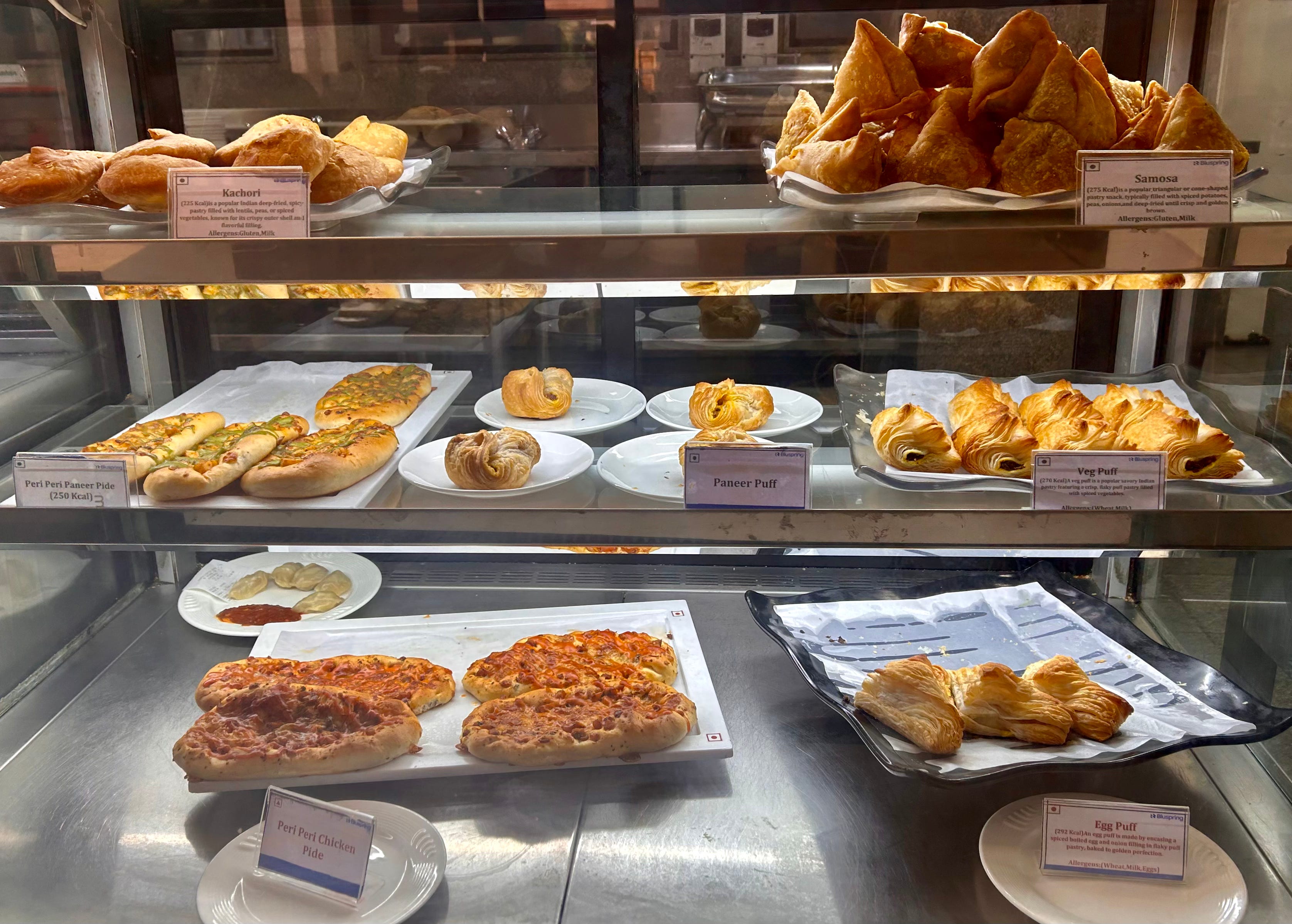
One afternoon early on in my term I was standing in line at the café with a friend chatting and as we reached the glass case containing veg puffs and other assorted snacks, I heard him mumble something that sounded like, “Samosa or chai.” It sounded like a question, as if he were asking the guy at the counter which one he should have, or which was better that day.
So I asked my friend, why did you order samosa or chai?
What do you mean?
You said samosa or chai. Why did you ask him to choose?
I didn’t. I got both.
You said “or.”
No, I didn’t.
Well what does “or” mean in Hindi?
What do you mean, ya?
I mean what does or mean. Samosa or chai.
I just told you, ya.
No, what you said. Or.
You mean aur.
Yes. Or.
No. Aur.
That’s what I said. Or.
No, he said. Aur.
What is aur?
Aur means and.
What do you mean or means and?
No. Aur means and.
So what is or?
Or is or. That’s English. You should probably know this.
So there is no or in Hindi?
There is ya. I told you already.
Ok so what is it, ya?
Correct.
What do you mean correct, yaar?
No, ya. Ya means or.
What!?
To the new firang, the difference between or and aur wasn’t audible, but beyond that the bigger mistake was trying to apply Boolean logic at the samosa counter.
You cannot say coffee or chai and then walk away with a cup of each. That defeats the entire function of “or” because or is binary. It’s an XOR gate, which by definition is exclusive. If you choose samosa, you have renounced chai. If you choose chai, you have forfeited samosa. That is the social contract embedded in the word or.
Whether it was aur or or, what I didn’t appreciate at the time was that I was being inducted into a completely new operating system, one that assumed inclusivity. Samosa did not cancel the chai and rice did not compete with dal; it assumed dal was there to begin with. In this system, or does not necessarily eliminate what follows, it leaves the door open to possibility.
This is why one-way roads don’t work in India. What one-way anyway, yaar? This way, that way, all ways, always.
Why choose when you can include? Why subtract when you can add? Why collapse possibility into a single traffic lane when there is room for both? The XOR gate belongs in the lab; the samosa counter and the chowks operate according to a more abundant philosophy.
But understanding aur and ya creates its own new challenge in that I am now completely ill-equipped for the world beyond India. Once you internalize inclusive logic, binary questions begin to feel unnecessarily cold and austere. It’s hard to unlearn that choices do not always require elimination, and that sometimes things simply accumulate. The samosa counter undid years of Western conditioning and trained me to assume nothing needed to be renounced.
As I sit here on my favorite perch in the afternoon breeze with my veg puff and adraki chai, it is now impossible for me to imagine one without the other. Naturally, I am wondering where the masala peanuts are as well.
Subbed you.. interested in reading your thoughts